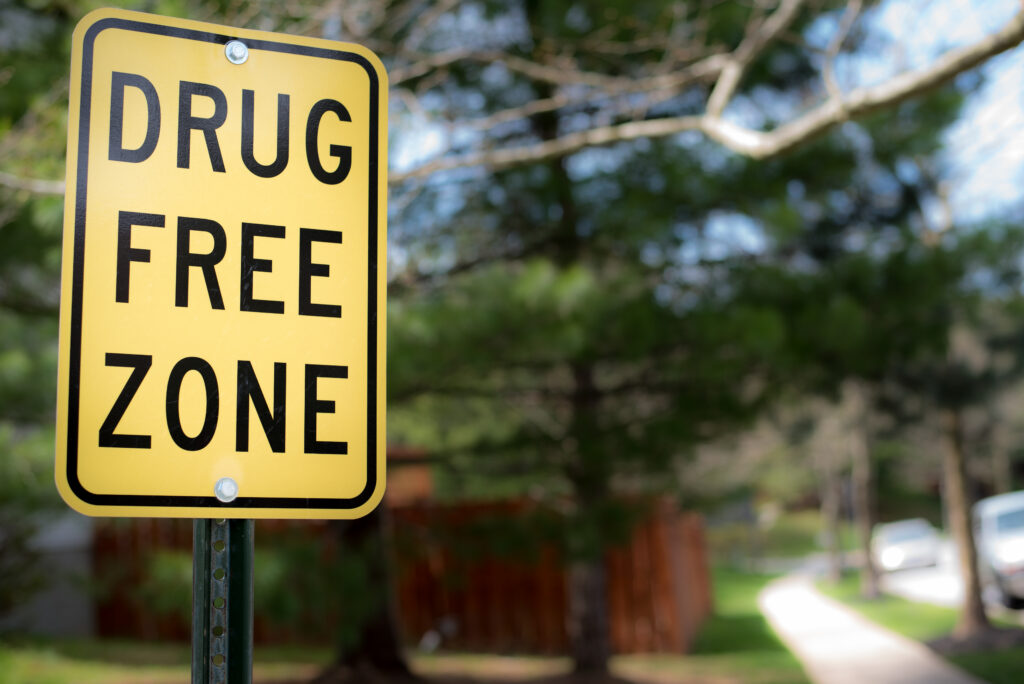
Many people arrested for drug possession assume the case will be treated like a standard possession charge. In Georgia, that is not always the case. If the arrest occurs within a designated drug-free zone, the penalties can increase dramatically, even if the amount involved is small or the individual has no prior record. These zone enhancements are designed to create a stronger deterrent near schools, parks, and other protected areas.
At The Abt Law Firm, our criminal defense attorneys handle drug possession and drug trafficking cases throughout the Atlanta area, including cases involving drug-free zone enhancements. If you are facing charges, it is important to understand how Georgia drug-free zones work and how they can affect your case. Knowing the rules can help you recognize whether your rights may have been violated or whether the state can truly prove the zone enhancement applies.
What is a "Drug-Free Zone" Under Georgia Law?
A drug-free zone is defined primarily by its location in relation to protected areas and the distance between the offense and those locations.
Georgia’s drug-free zone statute is intended to keep drugs like fentanyl and other drug paraphernalia away from places where children and families gather. Under O.C.G.A. 16-13-32.4, certain areas are designated as protected zones, and drug offenses committed within those zones can carry mandatory penalties.
Defining the 1,000-Foot Radius
The most common measure used in Georgia is the 1,000-foot radius. If the alleged drug activity occurs within 1,000 feet of a protected location, prosecutors may seek enhanced penalties.
However, determining whether a location falls within the 1,000-foot zone is not always straightforward. Measurements can vary depending on the starting point used, the route measured, and the accuracy of the tools used by law enforcement.
Protected Areas: Schools, Parks, and Housing Projects
Protected areas under Georgia drug-free zone laws include:
- Public or private schools
- Public parks and recreation centers
- Public housing projects
- Childcare facilities
- School buses or school property
These protections can extend beyond school hours and apply to areas that may appear unrelated to school activities. The purpose is to create a safe environment for children and reduce drug activity in public spaces.
The "Strict Liability" Trap: Why Your Intent Doesn't Always Matter
One of the most important aspects of Georgia drug-free zone laws is that the zone enhancement can apply even if the defendant did not know they were within a protected area. This is often referred to as a strict liability enhancement.
In other words, your intent or knowledge of the zone does not always matter. Prosecutors can argue that the location alone is enough to trigger the enhancement, even if you were unaware of the zone’s boundaries. This can be especially troubling for individuals who were traveling through an area or who were near a school or park without realizing it.
Enhanced Penalties: Understanding the Stakes
Drug-free zone penalties can significantly increase the consequences of a drug possession or distribution charge. The exact penalties depend on the underlying offense and whether it is a first-time or subsequent offense.
First-Time vs. Subsequent Offenses
The penalties can be more severe if you have prior drug convictions. Enhanced sentences may include longer jail or prison time, higher fines, and mandatory minimum sentences in some cases.
For example, drug possession within 1,000 feet of a school can escalate the charge and increase the sentence even if the drug amount is relatively small. If the offense involves intent to distribute in a school zone, the penalties can be substantially higher.
Consecutive Sentencing and Non-Mergeable Charges
Another serious risk in drug-free zone cases is consecutive sentencing. In some cases, prosecutors may argue that multiple charges do not merge, which can lead to back-to-back sentences rather than serving them at the same time.
This is particularly important when multiple offenses are alleged in or near a protected zone, such as possession, possession with intent to distribute, and drug paraphernalia charges.
Affirmative Defenses and Exceptions: Is There a Way Out?
Georgia drug-free zone laws do provide limited defenses and exceptions, but they are not automatic. Some potential defenses may include:
- Challenging whether the location actually falls within the 1,000-foot radius
- Disputing the accuracy of measurements or mapping tools
- Arguing that the protected area was not in use or was not a protected zone at the time
- Challenging whether the prosecution can prove the underlying drug offense beyond a reasonable doubt
- Showing lack of knowledge or control over the drugs
Affirmative defenses may be available in certain circumstances, but they often require strong evidence and legal argument to succeed. An attorney can help identify whether these defenses apply and how to use them effectively.
How an Atlanta Drug Defense Lawyer Challenges Zone Enhancements
Challenging a drug-free zone enhancement requires careful review of the evidence and a detailed understanding of how law enforcement determined the location. A skilled attorney will examine:
- The exact address or GPS coordinates used to establish the zone
- How the 1,000-foot measurement was taken
- Whether the protected area was accurately identified
- Whether law enforcement followed proper procedures in the investigation
- Whether any constitutional rights were violated during the arrest or search
At The Abt Law Firm, we handle a range of drug crime cases, including fentanyl cases, drug trafficking, drug possession, drug paraphernalia, and drug manufacturing. We understand how prosecutors build these cases and how to challenge the enhancements that can dramatically increase penalties.
Protect Your Future—Contact The Abt Law Firm
If you are facing a drug charge in a drug-free zone, it is important to act quickly. The stakes are high, and the difference between a standard possession case and a zone-enhanced case can be drastic.
To discuss your situation with an experienced Atlanta criminal defense attorney, contact The Abt Law Firm today at (770) 977-6105 to schedule your free, confidential consultation. Our lawyers will review the facts of your case, explain your options, and help you build a defense designed to protect your future.