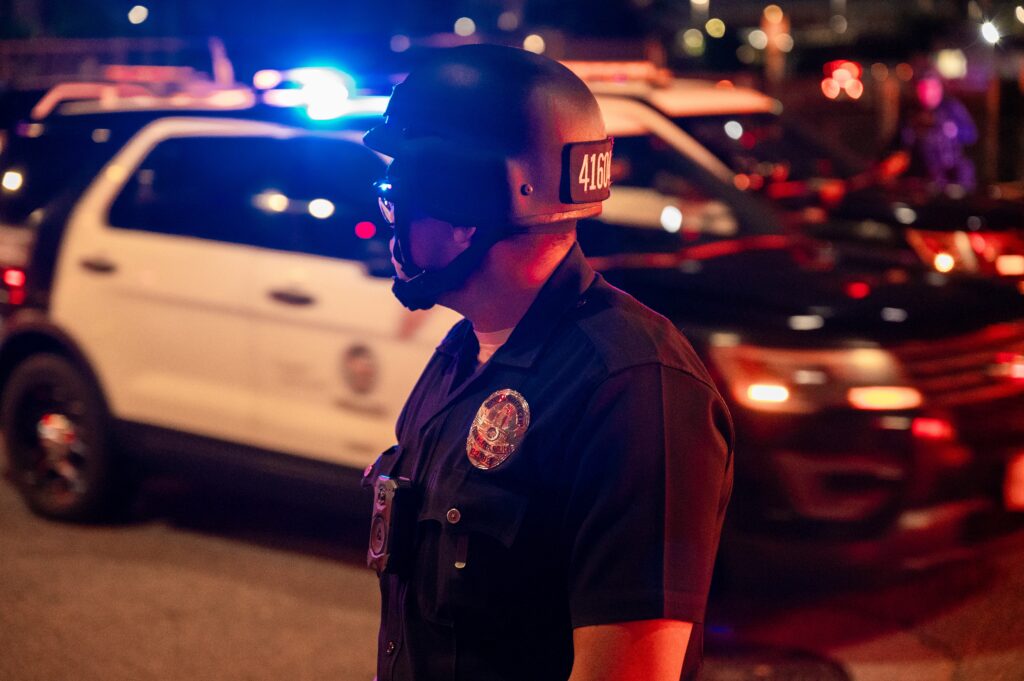
A new Georgia bill is putting police body camera footage and mugshots at the center of a major public debate. CBS Atlanta reported that Senate Bill 482 passed the General Assembly and would add new requirements for people seeking mugshots and police body camera footage.
For many people, this story sounds like a fight between privacy and the press. But in criminal defense, it is much bigger than that. Access to police video and arrest records can shape how fast the public learns the truth, how families understand what happened, and how quickly a defense team can begin testing the government’s version of events. When transparency gets harder, the risk of one-sided narratives gets higher.
What SB 482 Actually Does
Georgia already limits how booking photographs may be used. Under current Georgia law, law enforcement generally cannot post booking photographs online for public use, and a person requesting a booking photograph must submit a statement affirming the image will not be used in a way that violates the statute.
Georgia’s Open Records Act also already exempts some law-enforcement records from disclosure, especially during pending investigations, although initial arrest and incident reports remain generally available. Agencies must generally respond to public-records requests within three business days.
What Does This Mean?
SB 482 would tighten the entire process. Summaries indicate that requesters would need to identify the person shown in a mugshot and, for body camera footage, provide identifying information such as the person shown or the approximate date and time of the incident.
Reporting also indicates that the bill would require notarized, separate requests and would exempt members of the Georgia Press Association or Georgia Association of Broadcasters from some of those added steps. The House substitute also added language shielding certain audio or video that shows a person’s death or distress immediately before death, unless the request comes from next of kin or someone with written authorization.
Supporters say the bill is aimed at “mugshot mills” and websites that profit from humiliation and tragedy. Critics say the real-world effect may be to slow down or reduce public oversight of police conduct, especially for independent media, families, and community watchdogs who are not part of the protected groups named in the bill.
Why Body Camera Footage Matters So Much in Criminal Defense
Body camera footage can support the State’s case. It can also expose serious weaknesses in it. In many Georgia cases, video can help answer basic but life-changing questions.
These are not small details. They can affect charging decisions, suppression issues, plea negotiations, and trial strategy. That is why access matters. Even when a criminal defendant may still pursue evidence through the criminal case itself, public access can still shape the early stages of a case.
On its face, SB 482 amends Titles 35 and 50, which deal with law enforcement agencies and public records, not Georgia’s full criminal discovery rules. But in practice, public-record access still matters because families, journalists, and defense teams often begin gathering facts long before a case is fully litigated in court.
This is especially true when public pressure, community attention, or fast-moving media coverage starts to define the story before all the evidence is known. The concern from critics is simple: if access gets harder, accountability may get slower. And when accountability slows down, truth can get buried under official talking points.
Types of Cases Where Body Camera Footage Can Be Especially Useful
Body camera footage can matter in many kinds of Georgia criminal cases, but it is often especially important in cases that begin with fast police decisions or disputed facts.
For example, body cam footage may be useful in:
- DUI cases: Video may show how a traffic stop began, how field sobriety testing was handled, and whether the officer’s report matches what happened.
- Drug cases: Footage can help show whether police had a legal reason to stop, search, or arrest someone.
- Assault or obstruction cases: Video may capture whether a confrontation escalated the way police later described it.
- Gun possession cases: Body cam footage can help clarify where a weapon was found, who had access to it, and what officers observed before making an arrest.
- Domestic violence calls: These cases often move quickly and involve emotional scenes, so footage may preserve statements, injuries, and the overall context more accurately than memory alone.
- Cases involving use of force: When someone is injured during an arrest, body camera footage may become a key part of understanding what happened and whether the force used was justified.
In cases like these, video does not always tell the whole story. But it can provide critical context, reveal inconsistencies, and help defense attorneys test whether the State’s version of events is complete and accurate.
The Larger Criminal Law Implications
The broader issue is not only whether a reporter can get a video. It is whether the public can still check government power in a meaningful way.
Criminal laws carry enormous force. Police can stop, search, arrest, and use force. Prosecutors can file charges that put a person’s job, freedom, reputation, and future at risk. Because the stakes are so high, transparency acts as a safeguard. It does not replace the courts, but it helps the public see whether the system is working fairly.
If SB 482 becomes law, several things may follow:
- More friction at the front end of cases. Requiring notarized and highly specific requests may sound minor, but extra steps often reduce access in real life, especially for families, small newsrooms, and ordinary citizens.
- A wider gap between large institutions and everyone else. Critics have argued that exempting members of certain media groups could create a two-tier system, where legacy outlets get easier access than smaller digital or local publications.
- Less outside pressure on police and prosecutors. When video is harder to obtain, the public may have fewer tools to test official narratives about arrests, force, or disputed encounters.
How Does This Affect Pre-Existing Laws
Another thing to consider regarding this change is that there is a deeper legal backdrop here. Georgia’s Open Records Act says public records should be open unless exempted by law, and it must be broadly construed in favor of access.
At the same time, Georgia has been litigating access to body camera recordings already. The University of Georgia First Amendment Clinic and the Georgia First Amendment Foundation urged the Georgia Supreme Court in 2023 to revisit a restrictive interpretation of the body-camera exception in the Open Records Act.
In other words, this debate did not start with SB 482. The bill lands in the middle of an ongoing fight over how visible policing should be in Georgia.
How This Affects People Accused of Crimes
For a person facing charges, public transparency is not the same thing as legal defense. But the two can overlap.
A criminal accusation can destroy a reputation overnight. A mugshot can spread faster than the truth. A body camera clip, if released without context, can inflame public opinion before a jury is ever picked. So the privacy concerns behind SB 482 are real. Georgia’s current mugshot law was designed, at least in part, to stop businesses from turning arrests into online shaming and pay-for-removal schemes.
Still, criminal defense lawyers know the danger of swinging too far in the other direction. When access becomes too hard, the same system that claims to protect privacy can also shield mistakes. A bad stop, a rushed arrest, an unlawful search, or a misleading report may stay hidden longer. That hurts public trust, and it can hurt innocent people.
The right balance is not easy. Georgia should be able to protect people from exploitation without making it harder to examine police conduct.
What Georgia Families Should Be Watching Now
If SB 482 is signed, people across Georgia should watch how agencies apply it in the real world. The biggest questions will likely be practical ones: Will requests take longer? Will smaller outlets and independent watchdogs get shut out? Will families seeking answers after police encounters face more paperwork and more delay? Will agencies use the new rules narrowly, or as a reason to deny more requests?
Those questions matter because transparency is not abstract. It affects whether people can see the evidence behind the headlines.
How a Criminal Defense Attorney Can Help Fill the Gap
At The Abt Law Firm, our team has been focused on criminal defense since 2000, and the firm says it has represented thousands of clients across Georgia. We have seen how quickly a criminal accusation can turn a person’s life upside down.
Every case has two sides, and the public story that forms in the first days of a case is not always the full story. When the government controls the evidence and the timeline, defense work becomes even more important.
Facts matter. Context matters. And in Georgia, the fight over body camera footage and mugshots is really a fight over who gets to see the truth, when they get to see it, and how much power the State should have to manage that view.
If you or a loved one is under investigation or facing criminal charges in Georgia, The Abt Law Firm may be able to help. Contact us online or give us a call today at (770) 977-6105 to speak with a member of our team about your case today.